The strategic workshop “Future of Transport: Strategy or Chaos?” brought together around 30 participants — including business representatives, transport planning experts, international financial institutions, academics, and civil society organizations.

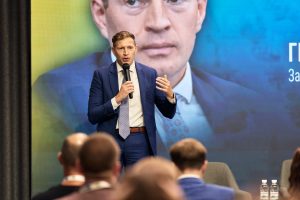
“We must focus on concrete and realistic steps in every transport segment. Ukraine has taken on a new role on the map of Europe and the world, and our transport system must be integrated with the European one — both institutionally and infrastructurally,” emphasized Oleksandr Kubrakov, Head of the We Build Ukraine think tank

At the heart of the discussion was a shared vision for the recovery and development of Ukraine’s transport system, identification of priority projects, and scenarios for integration into the European TEN-T network.

“It is crucial that we discuss key positions before laws and decisions are adopted. When government, donors, and experts shape a common vision, Ukrainian proposals become clearer to European partners. This demonstrates that Ukraine is serious about reforms and knows its place in the European transport system,” highlighted Olha Kvashuk, Program Manager for Europe and the World at the International Renaissance Foundation

Key topics addressed during the workshop included:
• European integration and TEN-T – defining priority corridors and projects to connect Ukraine with the EU transport network.
• Realistic projects – moving from concepts to concrete steps in rail, roads, ports, and aviation.
• War-related challenges – ensuring logistics continuity under conditions of destruction.
• Digitalization and innovation – new technologies for effective traffic management.
• Financing and PPPs – engaging investments and international financial institutions.
• Regulatory reforms – updating frameworks to accelerate modernization.

Participants emphasized that such expert platforms are crucial for shaping Ukraine’s European voice in negotiations with the EU and donors.
The workshop was prepared and conducted with the support of the European Union and the International Renaissance Foundation under the joint initiative “Together into the EU.” The views expressed reflect the authors’ position and do not necessarily represent the official stance of the EU or the International Renaissance Foundation..