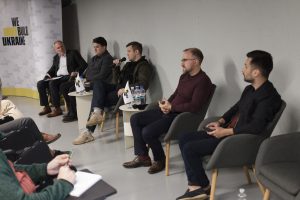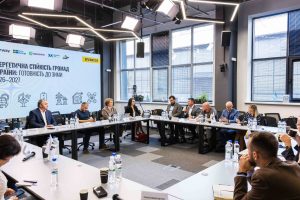
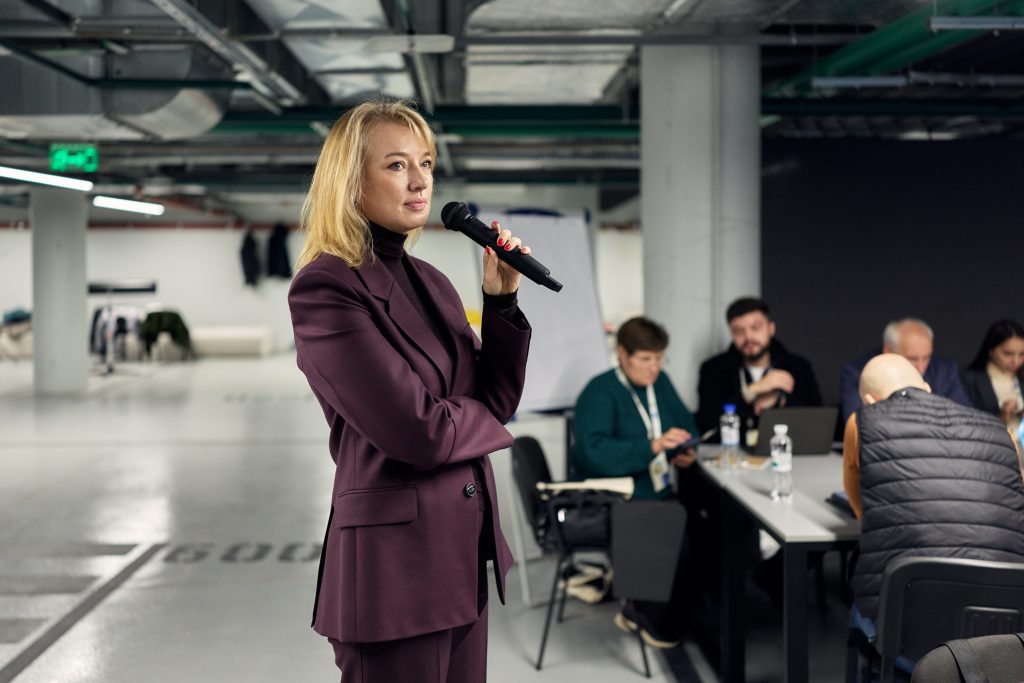
The meeting was attended by Oleksandr Kubrakov, Olena Shuliak and Anna Yurchenko. The work of the four thematic groups was facilitated by Mykola Bumazhnyi on energy efficiency, Liudmyla Tsyhanok on the environment, Hryhorii Melnychuk on spatial planning, and Dmytro Bespalov on transport and mobility.
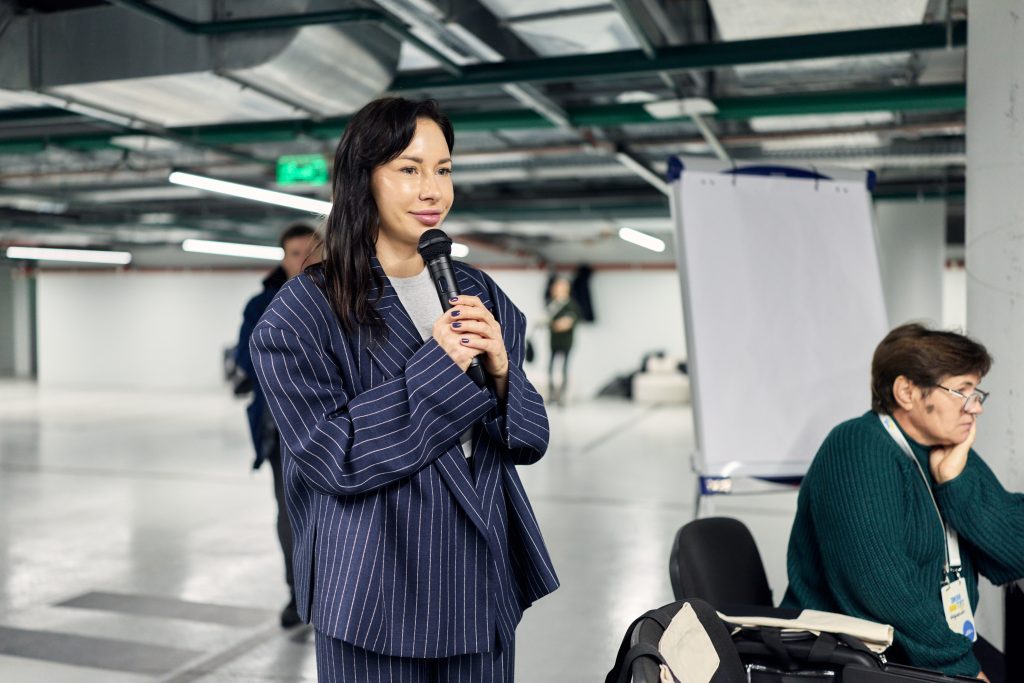
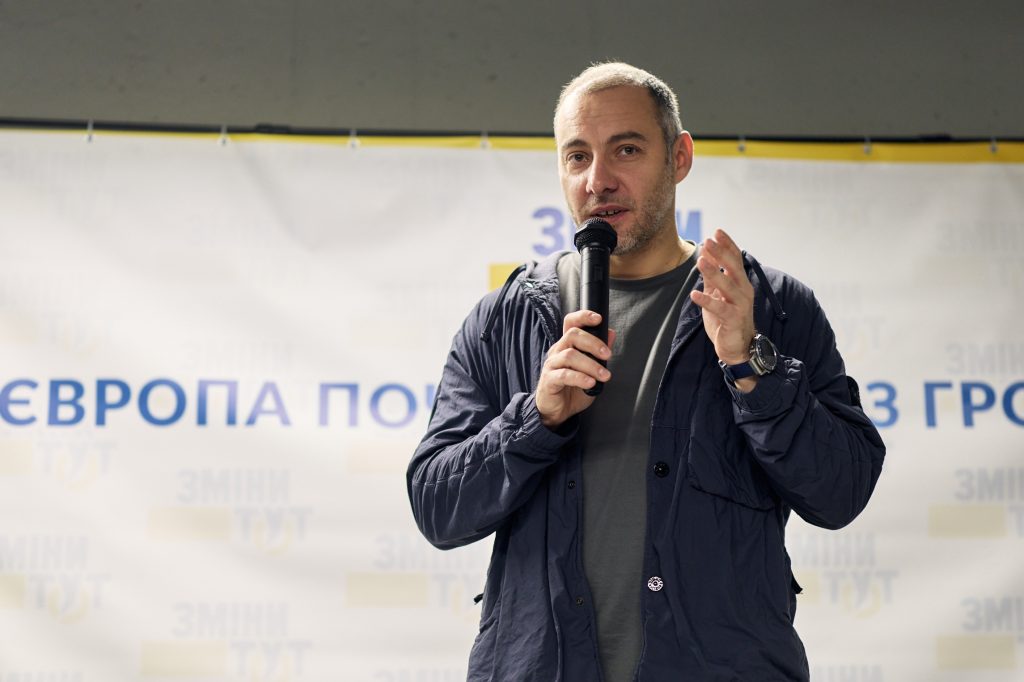
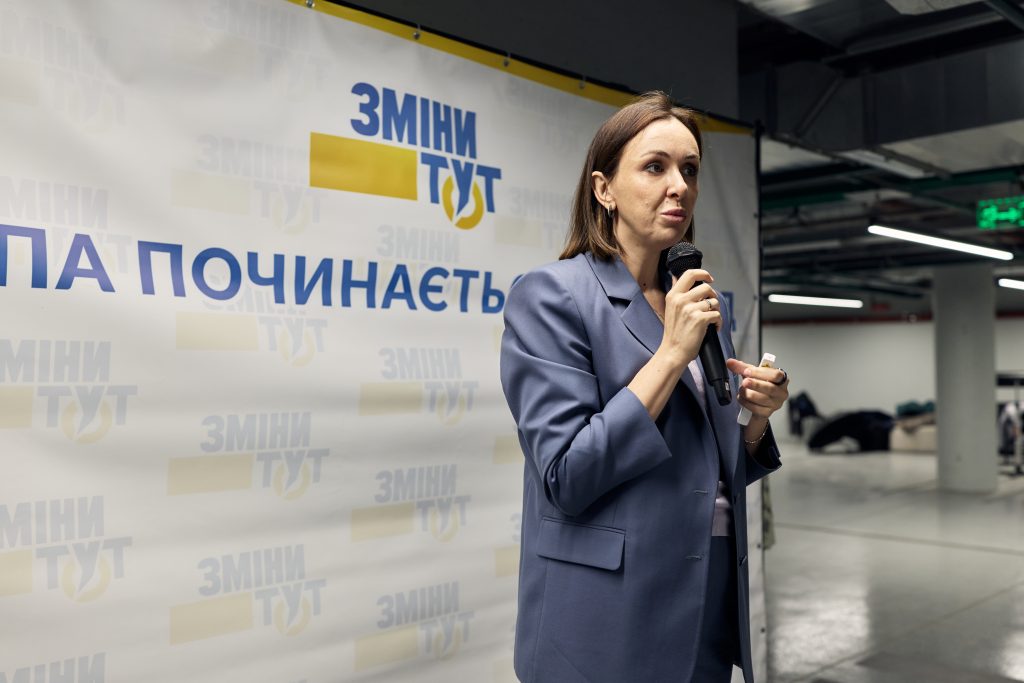
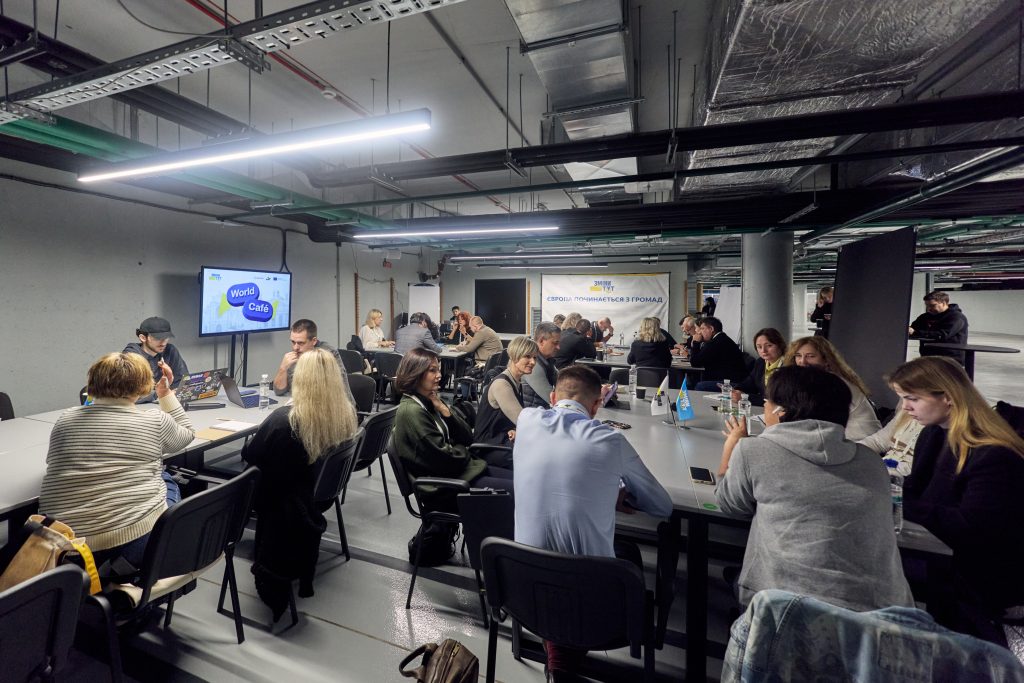
During three rounds of World Café discussions, participants identified problems, explored possible solutions and outlined first steps.
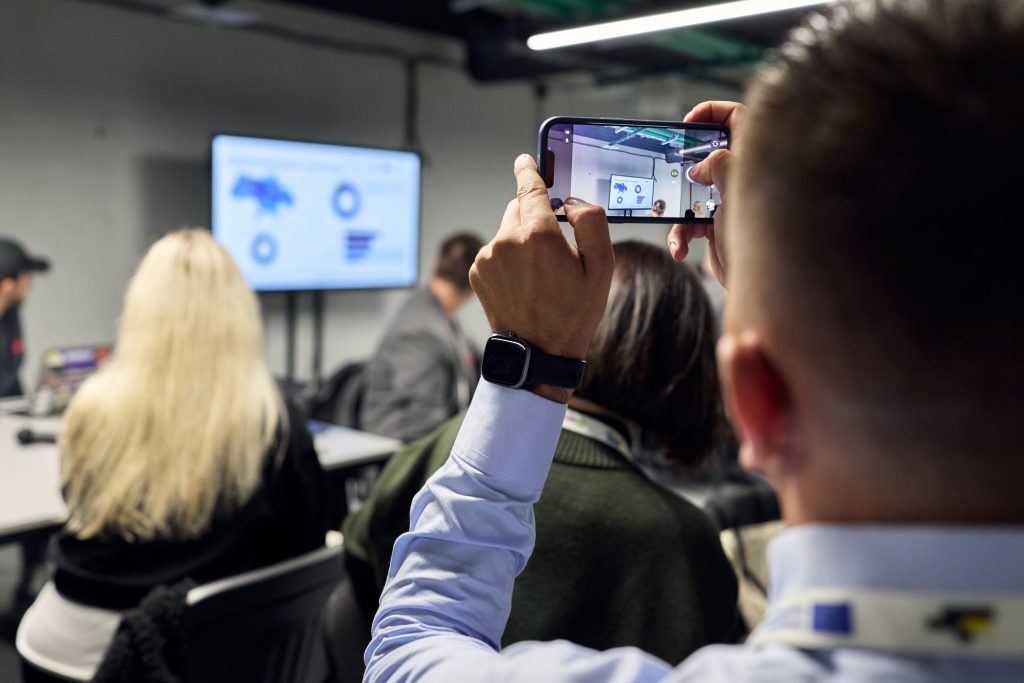
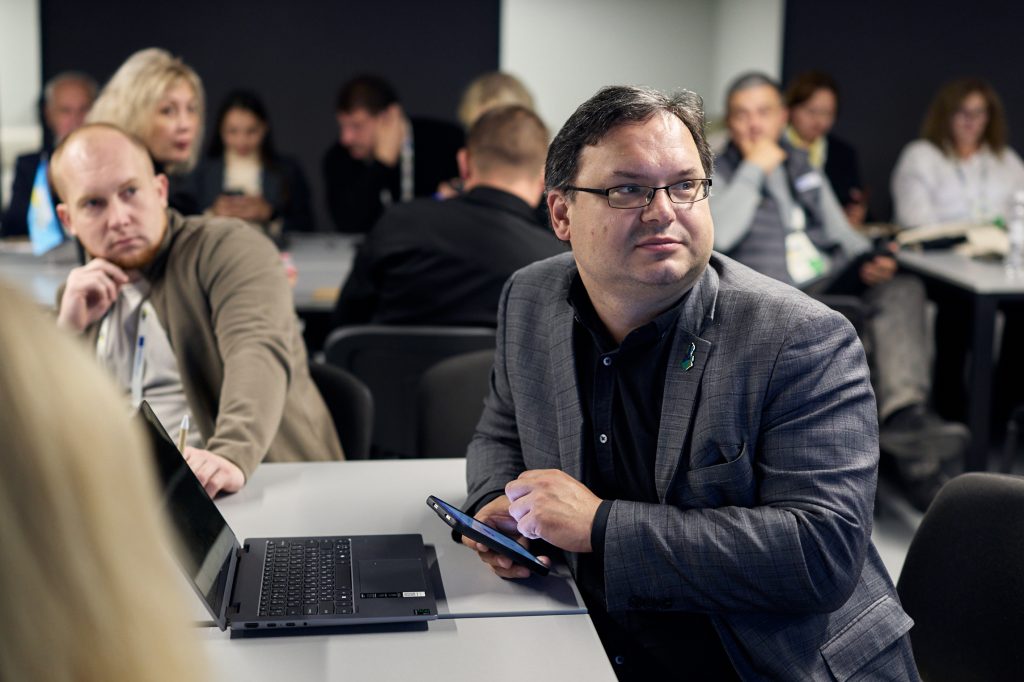
Energy efficiency. Participants discussed planning improvements to buildings, allocating funds in community budgets, and combining local co-financing programmes with national ones. Proposals included energy passports for buildings and clear tools for communities and residents.
The environment. Participants discussed how to improve waste management. They proposed setting up a local working group, collecting up-to-date data, surveying residents, comparing the costs of different solutions and identifying sources of funding.
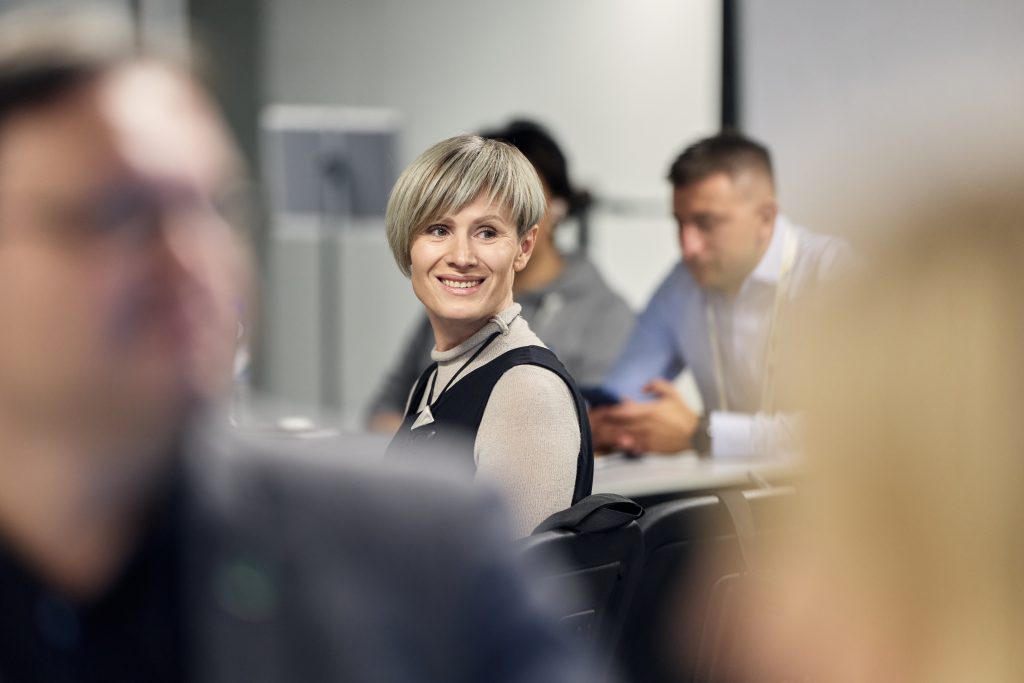
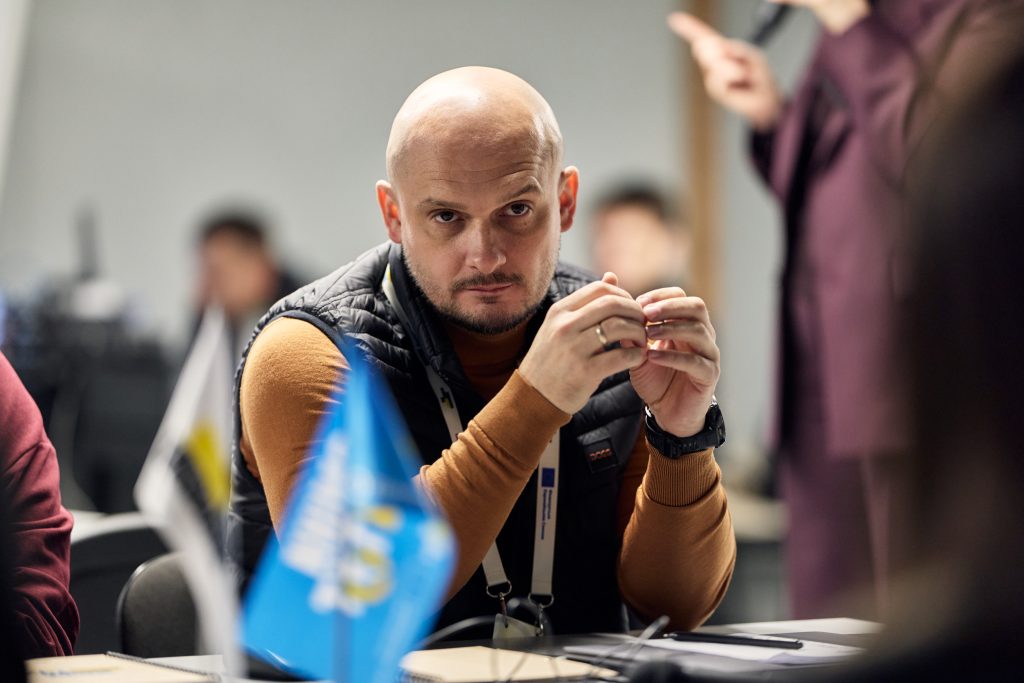
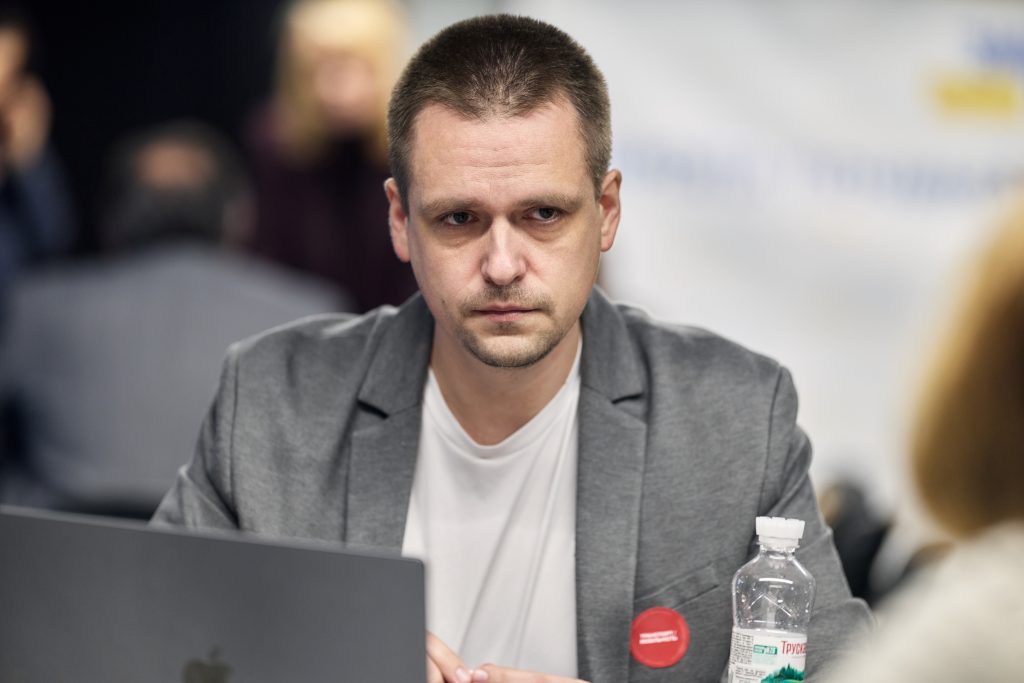
Spatial planning. Participants looked at ways to make services and public spaces accessible to people of different generations. They discussed the needs of older people, teenagers and young families, as well as neglected spaces that could become places for people to meet and connect.
Transport and mobility. Participants discussed who should be responsible for transport at the national and community levels, and how to collect data on travel patterns. One practical example was providing toilets and rest areas for women drivers, which could help attract more women to work in public transport.
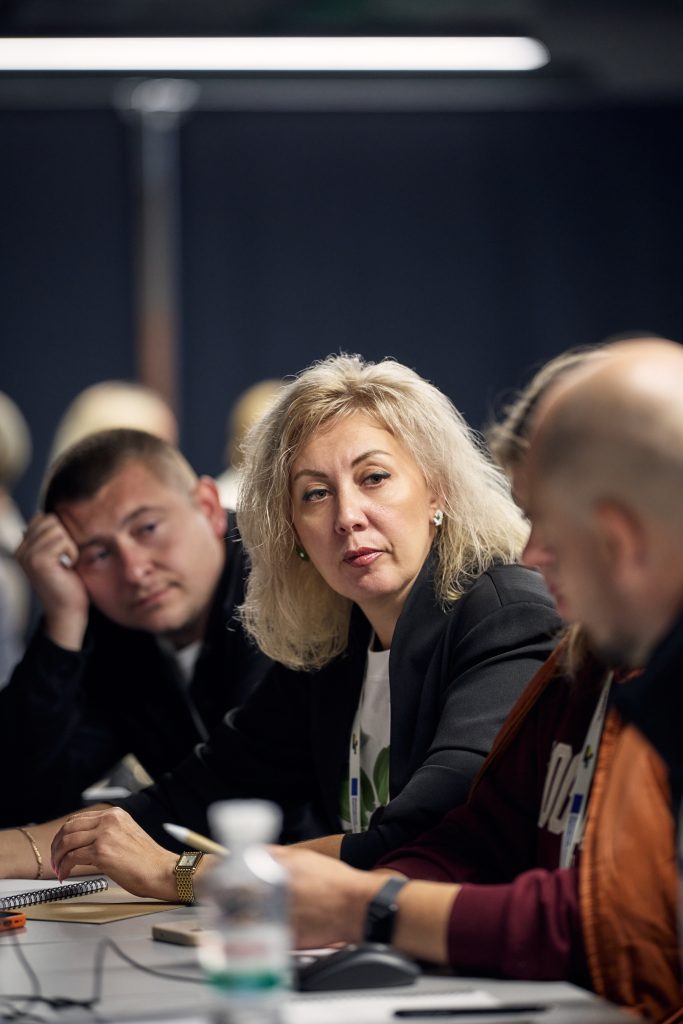
After the meeting, AI analysed the participants’ contributions and grouped around 40 ideas and proposed steps into a map of connections. It highlighted challenges shared across different areas: a lack of up-to-date data, specialists and funding, as well as the need to upgrade infrastructure. Participants also spoke about the importance of dialogue among residents, communities, specialists and authorities.
This is the start of practical work. Participants will continue working on their cases with the lecturers and develop them into projects for their communities. The experience and connections they built around the tables will help this work continue beyond the meeting.